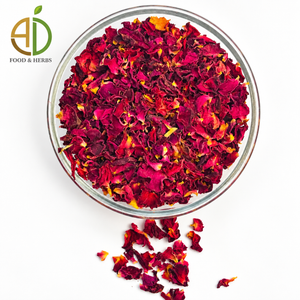
Uses and Benefits of Dried Rose Petals: Tea, Skincare, Cooking & More

Dried rose petals are a versatile, food-grade botanical used in tea, cooking, skincare, homemade rose water, and natural home fragrance. In this guide, we cover what dried rose petals are, the most common ways people use them, how to brew rose petal tea, and what to know before using them for the first time.
Roses have a long history of drying and use across cultures — but rather than dwell on that history, this guide focuses on practical, everyday uses you can try today.
What Are Dried Rose Petals?
Dried rose petals are fresh rose petals that have been carefully dehydrated to preserve their color and fragrance. Unlike fresh roses that wilt within days, properly dried petals stay usable for months when stored correctly.
Not all dried rose petals are the same, though — decorative dried flowers sold for potpourri and event décor are not food-safe, and shouldn't be steeped or eaten. For tea, cooking, or skincare use, always choose food-grade, pesticide-free petals — like the ones processed at A D Food & Herbs.

Rose is one of several food-grade dried flowers in our range — alongside hibiscus, blue cornflower, jasmine, chamomile, calendula, lavender, saffron, marigold, safflower, and butterfly pea flower — each processed and packed to the same food-safety standard. Browse our full Dried Flowers collection to see all of them.
Why Choose Rose Petals from Pushkar, Rajasthan?
Pushkar, in Rajasthan, is known for its long-standing tradition of rose cultivation, sometimes referred to locally as the "rose garden of Rajasthan." Rose growing in the region is said to date back generations, with roses traditionally valued for their fragrance and used in rosewater, gulkand, and temple offerings across North India.
What's typically grown around Pushkar is desi gulab — the traditional Indian rose, prized for its natural fragrance rather than the showier hybrid varieties bred mainly for the cut-flower trade. This fragrance-first tradition is part of why roses from this region are well suited to tea, culinary use, and skincare, rather than purely decorative use.
At A D Food & Herbs, our dried rose petals are sourced directly from Pushkar farmers, sun-dried to help preserve their natural fragrance and color.
Uses and Benefits of Dried Rose Petals
Contains Naturally Occurring Plant Compounds
Dried rose petals contain naturally occurring plant compounds, including flavonoids, which are part of the botanical profile of rose petals. They are traditionally used in herbal teas, culinary preparations, and skincare.
A Naturally Caffeine-Free Tea
Steeped in hot water, dried rose petals make a mild, floral tea with no caffeine at all — suitable any time of day, including in the evening. Our Rose Tea Cuts are cut specifically for easy steeping and pair well with chamomile, lavender, or mint.
A Traditional Ingredient in Skincare
Rose petals are traditionally used in homemade toners, face masks, and rosewater, valued for their mild, gentle character on the skin. Rose Powder works well here for a finer, more concentrated preparation. Calendula petals are another popular traditional choice for DIY skincare, often blended alongside rose.

Cooking and Baking
Food-grade dried rose petals add a delicate floral note to a wide range of dishes. Common uses include:
- Decorating cakes, cookies, and pastries
- Flavoring Indian sweets and milk-based desserts (like kheer or barfi)
- Infusing sugars and syrups for drinks and desserts
- Adding to jams and preserves for a floral note
- Blending into tea mixes
- Garnishing desserts and drinks for presentation
Since flavor concentrates during drying, a little goes a long way — too much can make a dish taste soapy rather than fragrant.
Used to Make Rose Water
Steeping dried petals in hot water and straining the liquid is a simple way to make rose water at home — used in Middle Eastern and Indian desserts, baking, and as a facial spritz. For step-by-step methods, see our dried rose petal recipes and DIYs, including rose water, rose sugar and a rose bath soak.
A Fragrant Addition to Bath Products
A handful of petals in a muslin bag under running bathwater makes for a fragrant soak — a traditional practice in many beauty routines.

Long-Lasting Natural Home Fragrance
Dried rose petals are a classic potpourri ingredient, releasing their scent gradually over weeks rather than all at once. They blend especially well with lavender buds and marigold petals for a fuller fragrance, and are also popular in drawer sachets and gift packaging.
A Traditional Hair Rinse
A cooled rose petal infusion, used as a final hair rinse, is a traditional practice for leaving hair naturally fragrant. Jasmine petals are traditionally used the same way, and the two are often combined.
Biodegradable Décor for Weddings and Events
Widely used for aisle décor and confetti tosses, dried rose petals are a biodegradable alternative to synthetic confetti. In Indian weddings and festive décor especially, rose is frequently paired with marigold petals for a fuller, more colorful spread.
Rose Petal Tea vs. Hibiscus Tea
| Feature | Rose Petal Tea | Hibiscus Tea |
|---|---|---|
| Flavor | Mild, floral, subtly sweet | Tart, cranberry-like |
| Color | Pale pink to light amber | Deep ruby red |
| Caffeine | None | None |
| Best suited for | Mild floral tea and floral blends | A tart, vibrant, fruitier herbal tea |
| Best paired with | Lavender, chamomile, mint | Mint, ginger, cinnamon |
Neither is "better" than the other — it comes down to whether you prefer a mild floral cup or a tart, fruitier one. Plenty of people keep both in rotation.
How to Brew Rose Petal Tea
Ingredients
- 1–2 teaspoons dried rose petals
- 1 cup hot water (just short of boiling)
Method
- Heat water until just short of a boil.
- Add the dried petals.
- Steep for 5–7 minutes.
- Strain and drink warm, or cool and serve over ice.
Optional additions: honey, a squeeze of lemon, or a few chamomile or lavender petals.

A Few Things Worth Knowing
- Only use food-grade, pesticide-free petals for tea, cooking, or anything applied near the mouth or eyes — decorative petals are not the same product.
- If you're pregnant or breastfeeding, check with a doctor before making rose petal tea a regular habit.
- If you take regular prescription medication, check with a doctor or pharmacist before drinking any herbal tea regularly, since herbal ingredients can sometimes interact with medications.
- For skincare use, patch-test on a small area first, especially if you have sensitive skin.
- This article is general information, not medical advice, and isn't a substitute for guidance from a healthcare professional about your own health.
Frequently Asked Questions
Are dried rose petals edible?
Yes — as long as they're food-grade and pesticide-free. Decorative or craft-grade petals are not intended for consumption.
Can I use dried rose petals to make tea?
Yes. Steep 1–2 teaspoons in hot water for 5–7 minutes, strain, and drink — no rehydration needed first.
What can I make with dried rose petals?
Tea, homemade rose water, flavored sugars and syrups, dessert garnishes, face masks and toners, bath soaks, potpourri, and drawer sachets are among the most common uses.
How should I store dried rose petals?
Keep them in an airtight container, away from direct sunlight and moisture, in a cool, dry place.
How long do dried rose petals last?
Stored properly, good-quality dried rose petals typically keep their color and fragrance for 6–12 months.
What's the difference between dried rose petals and rose powder?
Whole petals suit tea, garnishing, and potpourri; rose powder (finely milled petals) works better for face masks and baking where a smooth texture is needed.
What's the difference between rose tea and hibiscus tea?
Rose tea is mild, floral, and pale pink to amber in color. Hibiscus tea is tart, cranberry-like, and a deep ruby red. Both are naturally caffeine-free.
Can you use any rose petals for tea?
No. Florist and garden roses are often sprayed with pesticides and aren't processed as food, so only use petals sold as food-grade and pesticide-free. Decorative petals sold for crafts or event décor aren't intended to be eaten or steeped.
Choosing Quality Dried Rose Petals
A few things separate good dried rose petals from average ones:
- Food-grade sourcing — grown and processed specifically for consumption, not just decoration
- Proper drying — evenly dried to preserve color and fragrance without excess moisture
- Clean processing — free from dust, pesticide residue, and contamination
- Appropriate packaging — sealed to protect against moisture and light, which cause petals to fade and lose fragrance over time
A D Food & Herbs supplies food-grade dried rose petals, rose powder, and rose tea cuts, with FSSAI registration/licensing and MSME (Udyam) and APEDA registrations, where applicable. Our rose petals are sourced from Pushkar farmers and sun-dried to help preserve their natural colour and fragrance.
Looking for Quality Dried Rose Petals?
Whether you're shopping for your own kitchen or sourcing for your business, explore our food-grade dried rose petals, rose powder, and rose tea cuts — or get in touch for bulk and private label requirements.
Read More
Looking for ideas to try at home? See our dried rose petal recipes and DIYs. If you'd like to explore other herbal teas, take a look at our guides on the benefits of hibiscus tea and the benefits of blue cornflower tea.